Farewell to Conrad Shawcross’s Beacons, MICAS’s beloved sentinels
The story of MICAS is forever connected to the work of British contemporary artist Conrad Shawcross, whose Dappled Light of the Sun will keep gracing the MICAS forecourt
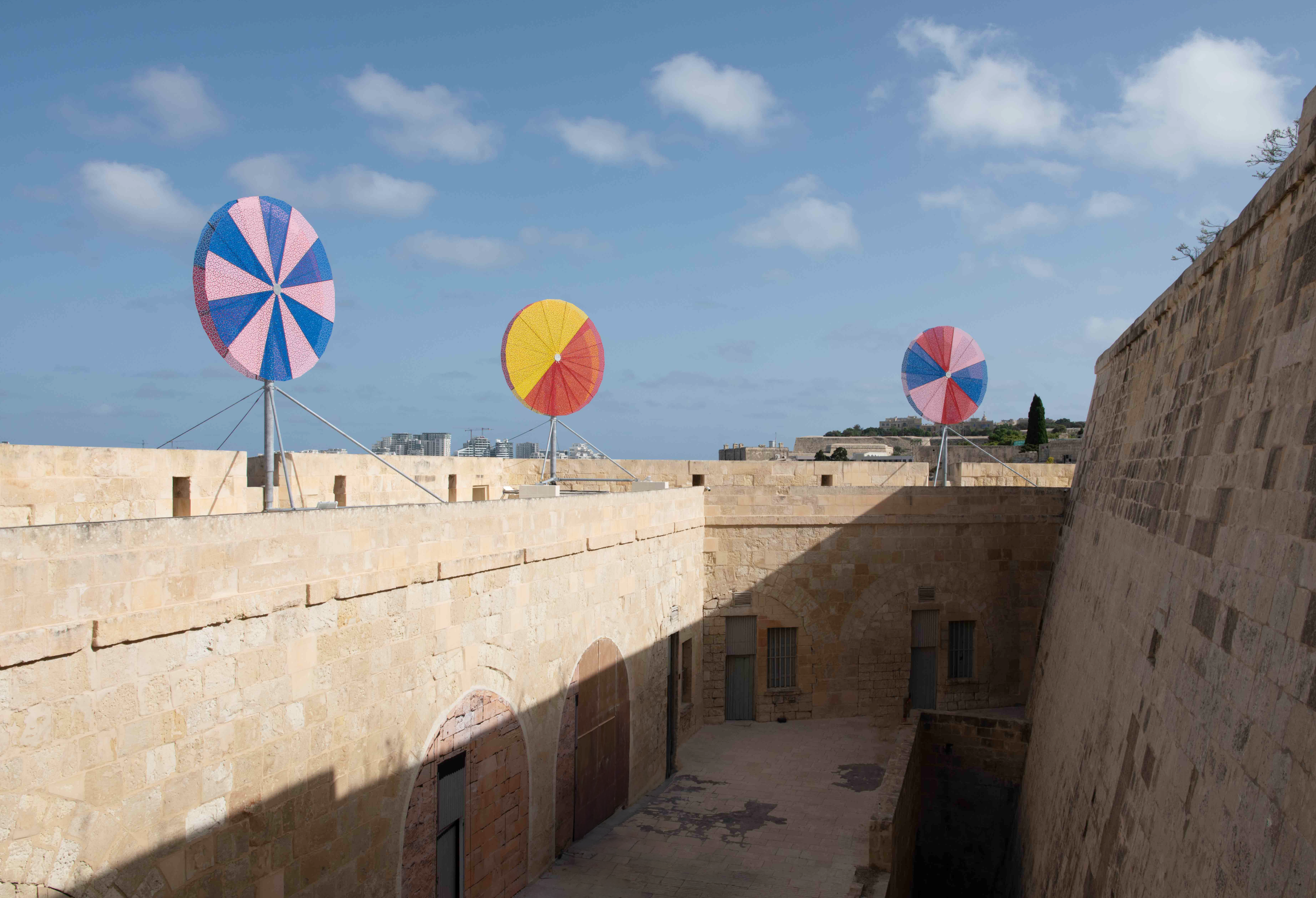
Looking down at the Marsamxett Harbour, British contemporary artist Conrad Shawcross manoeuvred one of the most trying of his sculptural installations – the erection of three steel sentinels with their colourful, rotating discs.
In 2023, they were the penultimate beacon of what was yet to come on the Floriana fortifications: ‘NOW’, they spelt out in semaphoric language. It was the imminent arrival of the Malta International Contemporary Art Space, which would open a year later in October 2024.
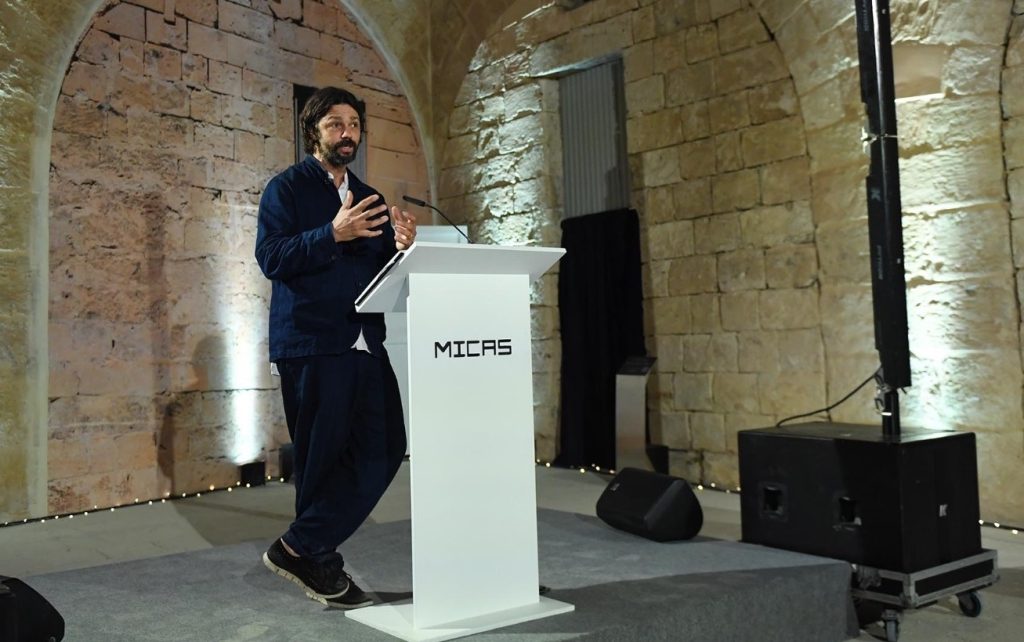
Conrad Shawcross
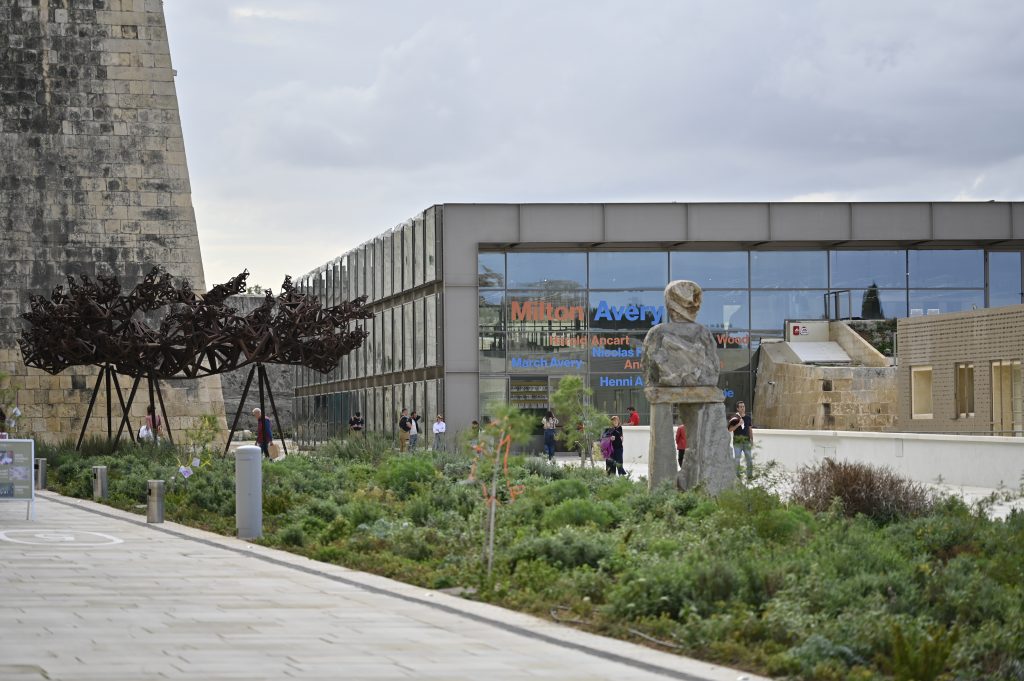
Like all artists who have graced MICAS and exhibited here, Conrad Shawcross is a friend of Malta’s newest cultural destination, with The Dappled Light of the Sun (Formation I) today a proud acquisition for the MICAS sculpture garden. It stands at the entrance of the main MICAS galleries offering a hint, or promise of what visitors are yet to experience once past the threshold – much like the Beacons sentinels have come to represent.
For two years, these ‘signals’ floating above the La Vittoria bastion became almost a national symbol for MICAS, with the three colourful discs clearly visible across the Msida Creek.
Today they belong to an honourable roll-call of works that have accompanied the patient completion of MICAS: first with Ugo Rondinone’s The Radiant when the MICAS works started in and around the Sa Maison gardens; then with Cristina Iglesias’s Sea Cave (Entrance) and Michelle Oka Doner’s The Palm Goddess located both in Valletta amid the pacing of the daily crowds.
Beacons was itself a challenging work, for from the views across the Creek, one is immediately faced by its colourful incongruity atop the deserted La Vittoria bastion’s limestone. Its stainless and galvanised steel masts, at 7.5 metres in height, supported a pair of counter-rotating semaphoric, optic discs, powered by the light of the sun and sky – like a stained-glass window, as the light filters through a pattern of hundreds of thousands of non-repeating holes, the colours of the maritime flags’ semaphoric code spell out the word ‘NOW’. Part child’s playfulness, part naval warning system, Shawcross’s work needed ample ballast and counterweights to withstand the wind speeds; decked in hard-hat and yellow vest, Shawcross assisted with the lifting. “I’m a bit of a big kid really… give me a crane and I’m happy.”
Beacons also captured the concept of time that is represented by the storied past of the fortifications MICAS is housed in. While we might be tempted to dismiss the fallow periods that followed the ebbing of the militaries that roamed these structures, Shawcross considered this arc of history with trepidation. As an example, he mentioned the climate crisis: “There is a lag between what we do now and what happens later… the new, extreme weather patterns and rise in temperatures are the consequence of things we did 10, or even 100 years ago. There are consequences to all our actions… and until then, there is a sense of what that consequence is.”
The other works by Shawcross on display at MICAS were Slow Arc within a Cube (I, VI, VII, XI, XIII, XIV), Patterns of Absence, Limit of Everythingand Paradigm Vex (Slender), all displayed in the series of barrel vaults at the base of the battlement walls. Installed in a reverse chronological order, they chronicled the sculptor’s journey in his work, from simple structures to his more visceral and complex works.
Steel, glass, wood… and geometry. These attributes are the mark of Shawcross’s body of work over the last 20 years. Beneath his rationalist and indeed scientific approach to art, Shawcross revealed a poetic heart in the machines that he called ‘artworks in disguise’, where the utilitarian exterior of these machines hides something more irrational beneath.
The laboriousness of the engineering in these works were also a process redolent of the science and graft present in many other art forms – the daily grind of the creative process. “In reality, being an artist involves processes that are very menial, repetitive and very hard work… the reality of what we do is tough and quite boring. Sometimes it’s arriving at the idea that involves a huge amount of toil. But it is rewarding, with wonderful, poetic results… they’re a struggle.”